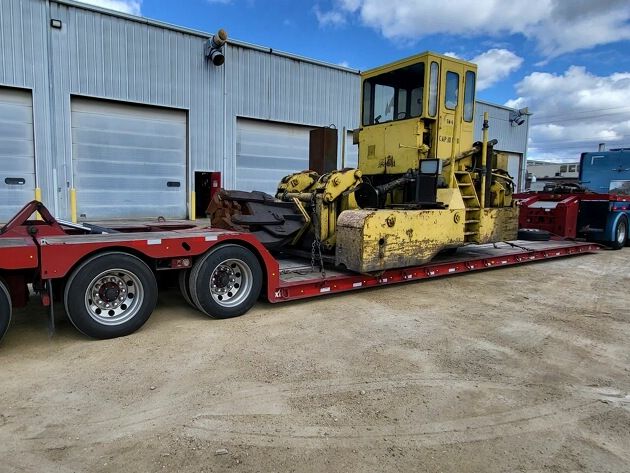
Manufacturing Freight Fails on Details, Not on Trucks
Finding a truck is the easy part. What sinks a manufacturing load is everything around it — a machine that’s 9’2” tall dispatched on a standard flatbed and running out of overhead clearance three states in. A carrier who shows up at two in the afternoon when the plant’s crane crew went home at noon. A press with precision-machined surfaces tarped by a driver who didn’t know what he was covering.
Book Freight works with manufacturers, machine tool dealers, fabricators, and industrial equipment builders moving freight that doesn’t fit the standard mold. We quote off dimensions, weight, and the receiving plant’s actual dock rules — so the right trailer shows up at a time the plant can take it.
Every load has an assigned contact from tender to POD, and the dock details are settled before the truck shows up — not at the gate.
Manufacturing Equipment We Move
- Machine Tools — CNC machining centers, lathes, mills, grinders, and presses moving from dealers, auctions, and manufacturers to plant floors. Height is almost always the constraint — most require step deck or double drop to stay legal.
- Production Equipment — Injection molding machines, stamping presses, industrial ovens, furnaces, compressors, and generator sets. Heavy, awkward, and expensive to damage.
- Fabricated Steel & Weldments — Structural steel, beams, weldments, subassemblies, and fabricated frames moving from fab shops to plants and job sites. Standard flatbed and Conestoga freight.
- Steel Coils, Plate & Raw Material — Coils, plate, castings, forgings, pipe, tube, and bar stock feeding production. Coil racks, securement, and weight distribution planned before dispatch. Higher-volume raw metal runs through our coil and plate freight operation.
- Conveyor & Material Handling Systems — Conveyor sections, racking, and material handling equipment for plant builds and line expansions. Frequently multi-truck and sequenced to an install schedule.
- Tanks, Vessels & Pressure Equipment — Process tanks, pressure vessels, and industrial containment equipment. Typically oversize and permit-dependent.
- Oversize & Overweight Components — Anything past legal dimension or weight. Permits, route surveys, escorts, and pilot cars planned before dispatch.
- Plant Relocations & Line Moves — Complete production lines moved between facilities. Multi-truck, sequenced, and coordinated against a shutdown window that doesn’t move.
Choosing the Right Trailer
Legal overall height is 13’6” in most states. Deck height is what decides whether your machine clears it.
| Trailer | Deck height | Cargo height | Best for |
|---|
| Flatbed | ~5’ | ~8’6” | Structural steel, coils, plate, and skidded or crated machinery. Loads from any side or overhead by crane. |
|---|
| Step deck | ~3’6” | ~10’ | Machine tools in the 8’6”–10’ range that won’t clear on a flatbed. |
|---|
| Double drop / RGN | ~2’ well | ~11’6” | Tall pieces. An RGN detaches at the neck so a self-propelled machine can drive on. |
|---|
| Conestoga | Flatbed or step deck | ~8’–9’6” | Machined equipment that needs weather protection without vinyl dragged across a finished surface. Still side-loadable for crane work. |
|---|
| Dry van | Dock height | ~8’6” inside | Crated components, spare parts, and palletized production material. |
|---|
| Expedited & team | Varies | Varies | Line-down parts. Sprinter, straight truck, or team drivers running direct with no relay. |
|---|
Approximate figures. Exact limits depend on the trailer and the states on the route — we confirm them before quoting.
Services We Provide for Manufacturers
Flatbed & Open DeckStep deck, double drop, RGN, and Conestoga for machinery and steel
Heavy Haul & OversizedPermits, route surveys, escorts, and multi-axle transport
Full TruckloadDry van and flatbed capacity for production material and components
Expedited FreightLine-down parts, critical spares, and team drivers running direct
Project CargoPlant relocations, line moves, and sequenced multi-truck delivery
Cross-Border CanadaU.S.–Canada machinery and component moves with border compliance
How We Handle Manufacturing Freight
- Dimensions before pricing. Length, width, height, weight, center of gravity, and lift points. A quote given without them is a number that will change — and it always changes in the wrong direction.
- Multi-stop supplier pickups planned in order. Consolidating from several suppliers onto one truck saves real money, as long as stop sequence, each site’s loading capability, and weight distribution across the deck are worked in advance. The last piece on is the first piece off.
- Plant appointments drive the transit. Receiving windows, gate procedure, and shutdown schedules are the constraint. We build the move around the appointment and hold the carrier to it — not the other way around.
- Securement matched to the piece. Chains, straps, blocking, bracing, edge protection, and coil racks selected for the commodity. Finished surfaces get protected or they get a Conestoga. They don’t get a tarp and a hope.
- Permits planned, not chased. Oversize and overweight permits, state routing, curfews, and escort requirements worked before the truck rolls. A permit chased after dispatch is a truck sitting still.
Manufacturing Sectors We Serve
- Industrial and heavy equipment manufacturers — outbound finished equipment and inbound components
- Machine tool dealers and rebuilders — used and rebuilt machinery moving to buyers and plant floors
- Steel fabricators and metal service centers — structural steel, weldments, and processed material
- Automotive and aerospace suppliers — tooling, fixtures, and production equipment moving between plants
- Food, chemical, and process equipment manufacturers — tanks, vessels, and process machinery
- Plant engineering and industrial contractors — equipment moving between projects and installations
What Manufacturing Shippers Get With Book Freight
- Direct access to the broker managing your freight — not a routing center or a support ticket
- A trailer recommendation based on your actual dimensions, before you get a rate
- Loading and unloading responsibility clarified up front, so nobody discovers a problem at the dock
- Carrier vetting for safety rating, insurance, equipment condition, and machinery experience
- Permit coordination handled as part of the move, not left for you to manage
- One point of contact from a single dry van through a permitted oversize load on the same project